
Learning Portuguese travel phrases greatly improves visits to Portugal or Brazil. Simple expressions help travelers communicate confidently, handle daily situations, and connect with locals. Knowing key phrases reduces confusion, lowers stress, and enhances the travel experience.
Why Learning Portuguese Phrases Matters
Even a limited knowledge of Portuguese can help travelers overcome language barriers quickly. Locals generally appreciate it when visitors try to speak their language, which often leads to warmer interactions and more helpful responses. In addition, basic language skills become especially valuable during unexpected situations or emergencies where clear communication is crucial.
Greetings and Basic Expressions
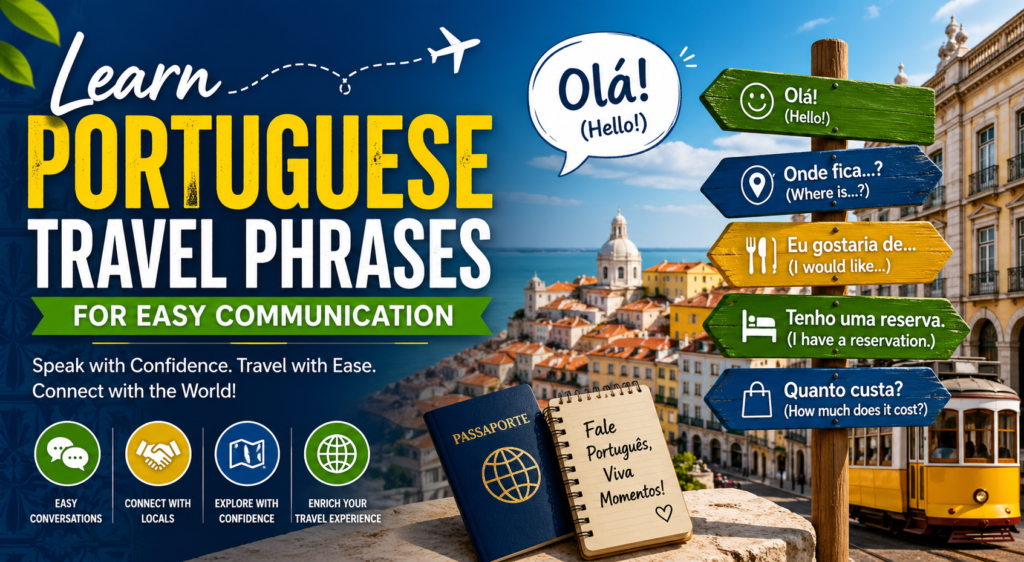
Starting with simple greetings is one of the easiest ways to gain confidence in a new language. Common words such as “Olá” (Hello), “Bom dia” (Good morning), and “Obrigado/Obrigada” (Thank you) are widely used in daily conversation. Starting with simple greetings offers one of the easiest ways to gain confidence in a new language. People widely use common words such as “Olá” (Hello), “Bom dia” (Good morning), and “Obrigado/Obrigada” (Thank you) in daily conversations. These basic expressions not only smooth communication but also leave a respectful and positive impression on locals. miliar cities. Using these expressions can make navigation in Portugal or Brazil far easier and help travelers feel more independent.
Ordering Food and Drinks
Food culture plays a major role in travel experiences, and knowing how to order in Portuguese enhances that experience. Useful phrases such as “Eu gostaria de…” (I would like…) and “A conta, por favor” (The bill, please) are. Food culture shapes travel experiences, and ordering in Portuguese enhances those experiences. Travelers frequently use phrases such as “Eu gostaria de…” (I would like…) and “A conta, por favor” (The bill, please) in restaurants and cafés. These expressions let travelers enjoy local cuisine without communication barriers. Posso fazer o check-out?” (Can I check out?) are essential for efficiently managing accommodation-related interactions.
Shopping and Local Markets
Exploring local markets becomes more enjoyable when travelers can communicate effectively. Phrases such as “Quanto custa?” (How much does it cost?) and “Tem desconto?” (Is there a discount?) Help in negotiating prices and intTravelers better enjoy local markets when they communicate effectively. Phrases such as “Quanto custa?” (How much does it cost?) and “Tem desconto?” (Is there a discount?) Help negotiate prices and interact with sellers. Using these expressions also enriches cultural experiences and builds confidence in real-world communication.ssistance. In urgent situations, knowing basic Portuguese proves extremely important. Travelers use expressions like “Ajuda!” (Help!) and “Preciso de um médico” (I need a doctor) to seek immediate assistance. These essential phrases can play a critical role in ensuring safety while traveling abroad. Even small and consistent practice efforts help build confidence and make spoken Portuguese easier to understand.
Conclusion
Learning Portuguese travel phrases provides three main benefits: it improves communication in daily situations, enhances cultural experiences by connecting with locals, and gives travelers confidence to navigate new environments. With regular practice, even beginners can experience these advantages on their journeys.