
For many people, candy stores are more than simple shops. They hold memories, happiness, and moments of joy. A candy brand that lasted 141 years was once a trusted name in many homes. Families relied on it. Children felt excited visiting it. Customers returned again and again because of that emotional connection. But now, many people are asking a simple question: why did a 141-year candy store chain close after surviving for so long?
The answer is not based on a single issue. Instead, it comes from several small challenges that slowly became bigger over time. As the market evolved, the business struggled to keep pace with these changes. This situation is common for many legacy brands. They build a strong foundation over decades, but when trends shift, adapting becomes difficult.
Shopping behavior has changed a lot. Today, customers often search online using terms like “best candy shop near me” or “buy sweets online delivery.” If a brand does not appear in search results, it slowly fades from customer awareness. While this candy chain remained strong in physical stores, it lost visibility in the digital space.
At the same time, new competitors entered the market with fresh strategies. These brands focused on social media, eCommerce, and modern marketing techniques. They connected with today’s audience in a way that felt relevant and engaging. In contrast, the older candy chain continued to rely mainly on walk-in customers and did not fully adjust to new consumer habits.
This is how a long and successful journey gradually came to an end. It was not a sudden failure but a slow decline that went unnoticed until it became too late to recover.
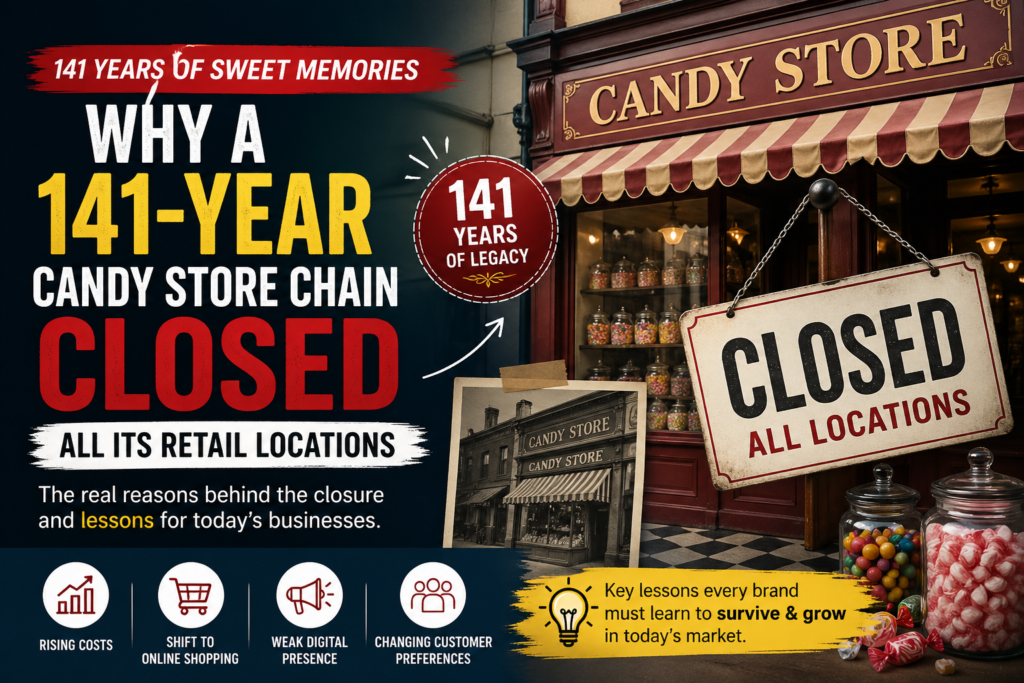
The Real Reasons Behind the Closure
Understanding why a 141-year-old candy store chain closed requires looking at today’s business environment. One of the main challenges was the steady rise in operational costs. Rent increased, employee wages grew, and supply expenses became higher. However, revenue did not increase at the same rate, creating financial pressure.
Another key factor was the rapid growth of online shopping. Consumers now search for options like “order sweets online USA” or “online candy delivery near me.” They expect convenience, quick service, and a wide variety of products. Businesses that meet these expectations grow faster, while those that do not struggle to compete.
The candy store chain did not fully invest in building a strong digital presence. Its website visibility remained low, and it did not rank effectively on search engines. This made it difficult for new customers to discover the brand. Over time, even loyal customers shifted toward more accessible and modern alternatives.
Consumer preferences also changed significantly. Today’s buyers are more interested in healthier choices, unique flavors, and visually appealing treats they often discover through social media. Traditional offerings that once attracted customers began to feel outdated. Without continuous innovation, the brand found it hard to engage younger audiences.
Marketing gaps also contributed to the decline. Modern brands actively use platforms like Instagram and TikTok to reach large audiences. They create engaging content, run targeted campaigns, and build strong communities. The candy chain’s limited focus on digital marketing reduced its overall reach and visibility.
All these factors combined to create a difficult situation. Rising costs, weak online positioning, evolving customer expectations, and limited marketing efforts made long-term survival increasingly challenging.
What This Means for Today’s Businesses
The closure of such a historic brand is more than just a business story. It serves as an important lesson for companies operating in today’s competitive market. It shows that longevity alone is not enough. Continuous growth and adaptation are essential.
In the modern marketplace, visibility plays a crucial role. When users search for terms like “best sweets shop near me” or “top candy brands online,” your business must appear in those results. Search engine optimization is no longer optional. Without strong rankings, businesses lose potential customers every day without realizing it.
Understanding customer behavior is equally important. Today’s consumers value convenience. They prefer to explore products online, compare options, read reviews, and make quick purchases. Businesses must create a seamless and user-friendly experience to meet these expectations.
Content also has a powerful impact. Brands that provide helpful, clear, and engaging information build trust with their audience. When users find valuable content, they are more likely to stay, interact, and convert into customers. This also strengthens search engine performance.
Local search optimization is another key factor. Many users search with intent, using phrases like “candy shop near me open now” or “best sweets in Karachi.” Businesses that optimize for local keywords can attract nearby customers more effectively.
The overall lesson is clear. Change is not optional in today’s market. Businesses that listen to their audience and adapt to trends continue to grow. Those that resist change risk becoming irrelevant over time.
How Brands Can Avoid the Same Mistake
Learning why a 141-year-old candy store chain closed helps businesses understand what actions to take for long-term success. Today, there are many opportunities to grow, but they require the right strategy.
Building a strong online presence is essential. A website should be fast, simple, and easy to navigate. It must clearly present products, pricing, and contact details while being optimized for search engines to improve visibility.
Content creation is another effective strategy. Informative blogs, answers to common questions, and helpful guides attract users naturally. Topics like “best sweets for kids” or “where to buy candy online” align with user intent and increase organic traffic.
Social media engagement also plays a major role. Regular posting, creative visuals, and interaction with customers help build a strong brand identity. It keeps the business relevant and connected with its audience.
Product innovation is equally important. Introducing new flavors, improving packaging, and offering seasonal products can attract attention and drive sales. Listening to customer feedback helps businesses stay aligned with market demands.
Pricing strategy must also be balanced. Offering quality products at fair prices ensures customer satisfaction. If prices rise without added value, customers will quickly explore other options.
Tracking performance is the final key step. Monitoring website traffic, keyword rankings, and customer behavior provides valuable insights. It helps businesses understand what is working and where improvements are needed.
Final Thoughts on a Changing Market
The story behind why a 141-year-old candy store chain closed reflects a broader shift in the business world. Consumer behavior, technology, and competition have all evolved significantly.
Today, success depends on visibility, adaptability, and strong customer relationships. Businesses must stay active, respond quickly to changes, and continuously improve their strategies. Those who embrace change can grow and succeed, while others may struggle to keep up.
This example also highlights an important truth. A strong history is valuable, but it cannot guarantee future success. Brands must continue to innovate and build relevance every day.
Trust, quality, and experience remain important, but they must be supported by modern marketing, digital presence, and customer-focused strategies. Businesses that combine these elements are more likely to thrive in today’s fast-changing environment.